
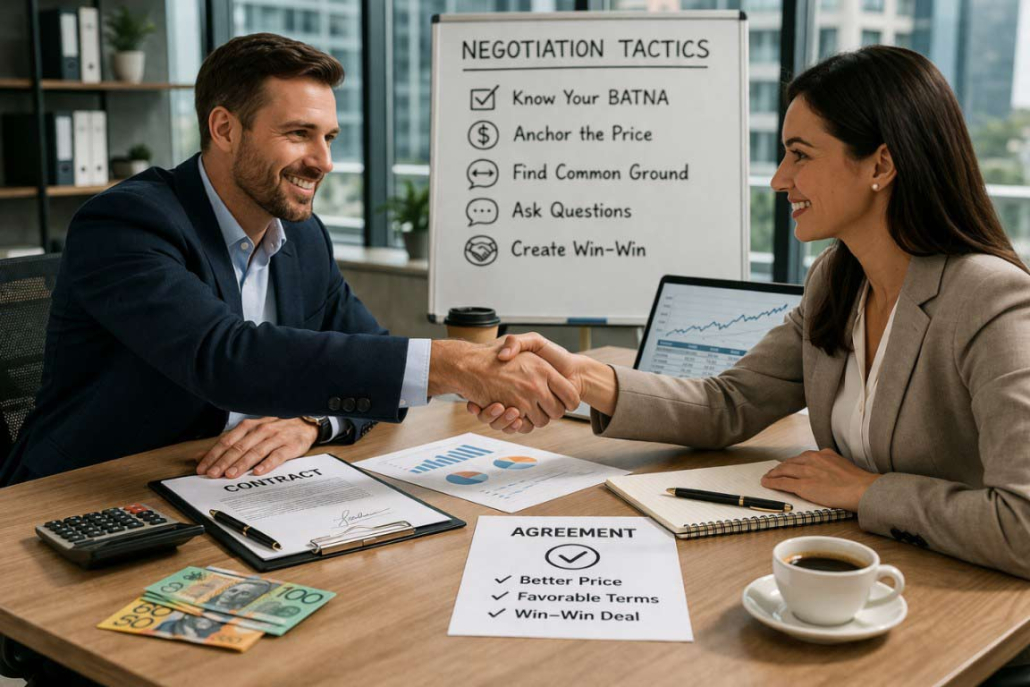
Secret Negotiation Tactics That Help You Win Every Deal
Winning a deal is not about pressure or persuasion alone. It is about clarity, positioning, and timing. At Dynamo Selling, negotiation is treated as a structured process where preparation, control, and communication shape outcomes. Strong negotiators do not chase agreements, they guide them. When each stage is handled with intent, conversations shift from resistance to alignment, leading to decisions that feel natural, balanced, and commercially sound.
Key Takeaways
- Preparation defines negotiation strength
- Listening creates leverage
- Timing influences decision-making
- Value positioning outweighs price discussion
- Structure leads to consistent outcomes
Why Negotiation Is a Strategic Skill, Not a Reaction
Many professionals approach negotiation as a final step. In reality, it begins much earlier.
It starts with:
- Understanding the client’s priorities
- Identifying constraints before discussions begin
- Structuring offers with clarity
Structured preparation significantly increases agreement success rates. Negotiation is not a moment. It is a process built over multiple touchpoints.
What Defines a Winning Negotiation?
A winning negotiation is not just about getting the best price or terms. It is about achieving your goals while maintaining a strong position and relationship.
Key indicators include:
- Clear and confident communication
- Balanced outcomes that favor your priorities
- Control over the direction of the discussion
- A result that can be sustained long-term
When these elements are present, the deal is not just successful, it is strategic.
Tactic 1: Preparation: The Foundation of Every Deal
Preparation is where most negotiations are won or lost. Entering a discussion without a plan puts you at an immediate disadvantage. Strong preparation gives you clarity, confidence, and control.
Before any negotiation, understand your:
- Negotiation goals and objectives
- Walk-away point (BATNA)
- Alternative deal options
Preparation Strategies:
- Define your ideal outcome and minimum acceptable result
- Research the other party’s needs and motivations
- Prepare backup options if the deal fails
- Anticipate objections and plan responses
Tactic 2: The Power of Information
Information is one of the strongest forms of leverage. The more you know, the better decisions you can make. Skilled negotiators focus on learning rather than talking. Understanding what the other side truly values allows you to position your offer more effectively.
Information-Gathering Techniques:
- Ask open-ended questions
- Listen more than you speak
- Observe tone and body language
- Identify hidden priorities and concerns
Tactic 3: The Art of Anchoring
Anchoring is the tactic of setting the starting point of a negotiation. The first number or offer introduced often shapes the entire conversation. A strong anchor gives you control, but it must be realistic to maintain credibility.
Anchoring Techniques:
- Start with a strong but reasonable offer
- Support your position with facts or logic
- Avoid accepting the first counteroffer quickly
- Adjust gradually instead of making large concessions
Tactic 4: Mastering Timing and Patience
Timing can influence the outcome as much as the offer itself. Rushing a negotiation often leads to poor decisions, while patience allows better opportunities to emerge. Strategic timing helps you control the pace and direction of the deal.
Timing Tactics:
- Avoid rushing decisions
- Let the other party respond first when possible
- Make concessions slowly
- Recognize the right moment to close
Tactic 5: Emotional Control and Discipline
Negotiations often involve pressure and tension. Losing control of emotions weakens your position and leads to mistakes. Staying calm allows you to think clearly and act strategically. At the same time, understanding the emotions of others helps you guide the conversation.
Emotional Intelligence Tips:
- Stay calm under pressure
- Avoid reacting impulsively
- Recognize emotional cues from others
- Focus on solutions instead of conflict
Tactic 6: Building Rapport and Trust
People are more likely to agree with those they trust. Building rapport creates a positive environment and makes negotiations smoother. Trust does not mean giving in, it means creating mutual respect.
Rapport-Building Techniques:
- Maintain confident body language
- Listen actively and acknowledge points
- Find common ground early
- Stay professional and respectful
Tactic 7: Framing the Deal Effectively
How you present an offer can change how it is perceived. Framing allows you to highlight value instead of cost and position your proposal as beneficial. A well-framed offer feels like an opportunity rather than a compromise.
Framing Techniques:
- Focus on benefits instead of price
- Present solutions, not demands
- Use clear and positive language
- Emphasize long-term value
Tactic 8: Using Leverage Strategically
Leverage is what gives you power in a negotiation. It comes from having alternatives, information, or something the other party needs. The stronger your leverage, the more control you have over the outcome.
Ways to Build Leverage:
- Develop strong alternatives
- Avoid appearing desperate
- Strengthen your position with data
- Use timing to your advantage
Tactic 9: Closing the Deal with Confidence
Closing is where many negotiators lose value. Agreeing too quickly or failing to confirm details can weaken the outcome. A strong close ensures clarity and commitment from both sides.
Closing Techniques:
- Summarize key points clearly
- Confirm agreement on all terms
- Address final concerns
- End on a confident and positive note
Common Mistakes That Weaken Deals
Even experienced professionals make avoidable errors.
- Entering negotiations without preparation
- Focusing only on price
- Over-talking instead of listening
- Making reactive concessions
- Ignoring emotional signals
These mistakes reduce control and limit outcomes.
Strengthen Your Negotiation Approach With Dynamo Selling
A structured negotiation approach requires consistency and refinement. Strong performance comes from repeatable systems, clear communication standards, and ongoing skill development across teams. When negotiation is treated as a disciplined practice, outcomes become more predictable and aligned with business objectives.
- Establish clear negotiation frameworks across teams
- Train staff on value-led conversations
- Review past deals to identify improvement areas
- Standardize communication techniques
- Align negotiation strategy with overall business goals
Conclusion
Negotiation is not about winning at the other party’s expense. It is about shaping an agreement that delivers value on both sides while maintaining control throughout the process. At Dynamo Selling, our team refines negotiation into a structured discipline that supports consistent, high-quality outcomes. If your organization is ready to strengthen its negotiation capability and improve deal performance, connect with us and build a system that delivers results with clarity and confidence.
FAQs:
What is the most important negotiation skill?
Preparation is the most critical factor, as it shapes strategy and positioning.
How can I negotiate without lowering the price?
Focus on value, outcomes, and long-term benefits instead of immediate cost reductions.
Why is silence important in negotiation?
Silence creates pressure and encourages the other party to reveal more information.
What are common negotiation mistakes?
Lack of preparation, over-talking, and reactive concessions are common issues.
How do I handle difficult clients during negotiation?
Stay composed, ask structured questions, and guide the discussion toward clarity.
Can negotiation skills be improved?
Yes. With training and consistent practice, negotiation performance improves significantly.
